
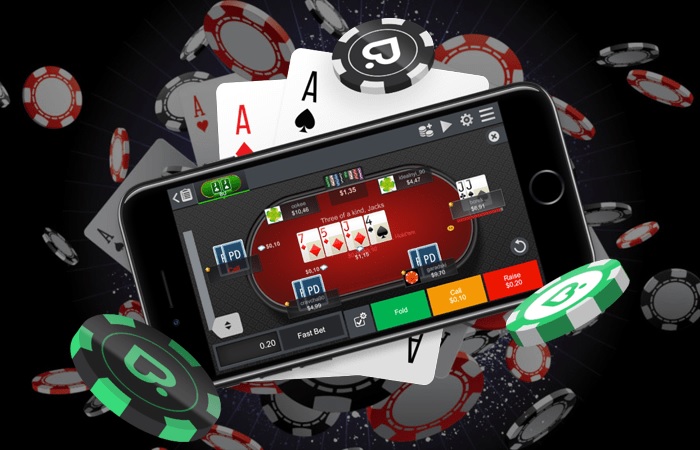
For over a century, poker was inextricably linked to physical space. It required a sturdy table, a deck of pasteboard cards, and proximity to other players willing to risk their capital. Whether in the dusty saloons of the American West, the neon-drenched poker rooms of Las Vegas, or a suburban kitchen table, the game was defined by its tangible limitations. The advent of online poker completely shattered these boundaries, triggering a paradigm shift that fundamentally rewired the game’s mechanics, player demographics, and underlying strategies. The migration from physical felt to digital screens did not simply create a new way to play cards; it accelerated the evolution of poker by decades, transforming a game of localized intuition into a global, highly quantitative discipline.
The Democratization of Access and Financial Flexibility
Before the internet era, aspiring poker players were severely restricted by geography and bankroll. If you did not live near a brick-and-mortar casino or a legal card room, finding a reliable, safe game was a logistical nightmare. Furthermore, physical casinos have substantial overhead costs, including highly trained dealers, security personnel, floor space, and operational utilities. To justify these expenses, traditional poker rooms enforce minimum buy-ins and rake structures that aggressively price out casual players. The lowest stakes available in a physical casino are typically one- and two-dollar blinds, requiring an initial buy-in of at least one hundred dollars just to sit down.
Online poker eliminated this physical friction entirely. By removing the overhead of a brick-and-mortar establishment, digital platforms introduced micro-stakes gaming, where players could buy into cash games for as little as two dollars, with blinds measured in pennies. This single innovation democratized the game overnight. Suddenly, a college student in a rural town had the exact same access to the game as a seasoned regular in Atlantic City. The financial barrier to entry plummeted, inviting millions of new players into the ecosystem who could learn the complex mechanics of the game without risking their financial livelihood.
The Velocity of Experience and Hand Volume
The most profound structural difference between live and online poker is the sheer velocity of the game. A highly efficient human dealer in a physical casino can deal roughly thirty hands per hour, accounting for time spent shuffling, collecting chips, and managing player disputes. In contrast, an online table operates with automated perfection, consistently dealing sixty to eighty hands per hour. However, the true acceleration of experience comes from the digital ability to multi-table.
A competent online grinder can comfortably play four, eight, or even twelve tables simultaneously across a pair of monitors. While a traditional live player might see one thousand hands during a grueling forty-hour week at the casino, an online professional can easily process that same volume in a single Tuesday afternoon. This exponential increase in hand volume means that an online player in their early twenties has often encountered, analyzed, and navigated more specific poker scenarios than a sixty-year-old live professional. Experience, which was once measured in years spent sitting at the table, is now measured purely in the volume of hands dealt.
The Rise of the Quantitative Player and Game Theory
The traditional image of the successful poker player was the intuitive card sharp—a master of psychology who could look an opponent in the eye and read their physical tells. Online poker replaced the intuitive sharp with the quantitative analyst. Because digital platforms perfectly record every single action, bet size, and folded hand in real-time, the game became a solvable mathematical puzzle rather than a contest of bravado.
The integration of third-party tracking software, such as Heads-Up Displays (HUDs), fundamentally altered how decisions are made at the virtual table. A HUD projects real-time statistical data directly onto the screen next to an opponent’s avatar, detailing exactly what percentage of hands they play, how often they raise before the flop, and how frequently they fold to aggression on the river. Consequently, the reliance on physical tells—a trembling hand, a pulsing neck vein, or a nervous conversation—was entirely replaced by the ruthless analysis of digital betting patterns and sizing tells.
This data-driven environment gave birth to the widespread adoption of Game Theory Optimal (GTO) play. Modern online professionals utilize incredibly powerful software solvers to study how a mathematically perfect computer would play any given hand to ensure it cannot be exploited. The focus shifted away from outsmarting a specific opponent based on feeling, and toward executing an unexploitable, mathematically sound strategy based on frequencies. This hyper-analytical approach has since bled back into the live arena, forever raising the baseline skill level required to win at the highest stakes of the game.
Redefining Tournament Logistics and Prize Pools
Physical casinos are strictly constrained by their square footage. Hosting a massive poker tournament requires hundreds of tables, thousands of chairs, and an army of trained floor staff. Even the largest convention centers in Las Vegas struggle to logistically manage fields of ten thousand players. Online poker platforms suffer from no such physical bottlenecks.
Digital architecture allows operators to host massive multi-table tournaments with tens of thousands of simultaneous entrants from across the globe. This unprecedented scale enables online poker rooms to offer massive guaranteed prize pools that rival major global sporting events, all fueled by relatively small individual buy-ins.
The concept of the satellite tournament—where players compete in a low-stakes event to win an entry ticket into a much more expensive, high-stakes tournament—was perfected on the internet. This mechanism famously ignited the global poker boom in the early 2000s when an amateur player parlayed a low-cost online satellite entry into a multimillion-dollar World Series of Poker Main Event victory. The dream of turning a tiny digital investment into life-changing generational wealth remains the primary engine driving global tournament liquidity today.
The Psychological Challenges of the Digital Grind
While online poker offers unmatched convenience, speed, and efficiency, it also entirely strips away the social and environmental elements that make live poker a popular recreational activity. Playing online is inherently solitary. The traditional sensory experience of the casino environment—the rhythmic clinking of heavy clay chips, the arrival of cocktail waitresses, the casual banter between hands—is completely replaced by the silent, sterile glow of a computer monitor.
This isolation creates unique psychological challenges for the digital player. Without the social friction and distraction of looking an opponent in the eye, the natural swings of variance can feel far more brutal and relentless. The sheer speed of the game means that severe downswings happen at an accelerated pace. A player can lose five consecutive buy-ins in the span of an hour due to unavoidable mathematical bad luck, requiring immense emotional control to avoid tilting and losing even more. Managing this rapid-fire variance, while maintaining absolute intellectual focus across multiple tables for hours on end in a quiet room, requires a level of stoicism and mental endurance that was rarely demanded by the slower, more conversational pace of traditional live poker.
The Symbiotic Future of the Felt
Despite the massive operational and atmospheric differences, online poker did not cannibalize the traditional casino experience. Instead, it created a deeply symbiotic relationship that fueled unprecedented growth across the entire gambling industry. The digital tables serve as the ultimate modern training ground, a minor league system where players develop their fundamental skills, study complex mathematics, and build their initial bankrolls.
Once these digital players achieve a level of financial success and confidence online, they inevitably transition back to the physical arena to test their digital strategies against flesh-and-blood opponents. Today, the world’s most prestigious live high-roller tournaments are heavily populated by brilliant young minds who cut their teeth exclusively on the internet. Conversely, major live poker festivals are now deeply integrated with online platforms, offering hybrid tournament series where players can compete for official physical bracelets and championship rings directly from their laptops.
The traditional gaming experience has not been destroyed; it has been permanently upgraded and digitized. The integration of software tracking, advanced mathematical game theory, and borderless global accessibility has transformed poker from a niche casino offering into a highly competitive, global mind sport. As the lines between the physical casino floor and the digital client continue to blur, the modern poker player must master the chaotic human element of the live game while maintaining the cold, unyielding mathematical precision forged on the internet.