
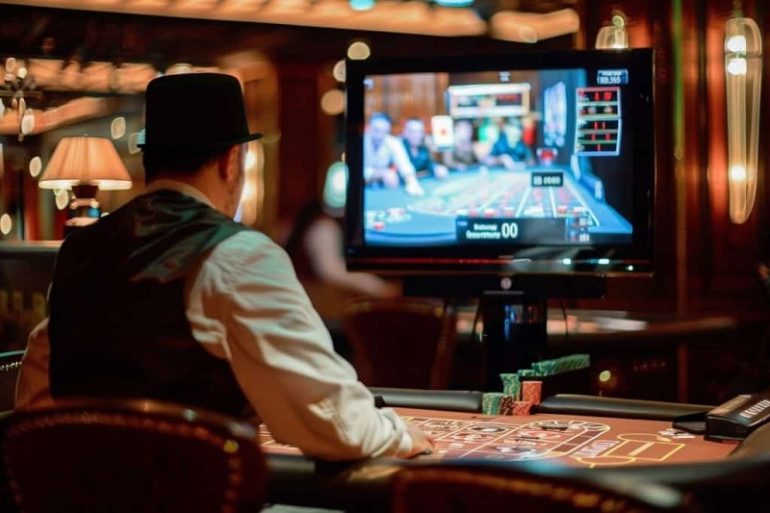
For the first two decades of the internet era, the online casino industry operated on a highly successful but fundamentally sterile premise. Players logged onto platforms to interact with two-dimensional graphics and software-driven Random Number Generators. While these digital tables offered unprecedented convenience and speed, they lacked the visceral, atmospheric energy of a physical casino floor. The clatter of chips, the banter between players, the physical suspense of a card being drawn from a shoe—these were elements that lines of code simply could not replicate. Today, that digital divide has been completely erased. The advent and refinement of live dealer technology have triggered a massive paradigm shift in the iGaming sector, transforming online gambling from a solitary, computerized activity into a deeply immersive, real-time interactive broadcast.
The integration of live streaming into online casinos is not merely a superficial upgrade; it is a complex convergence of high-end broadcasting, advanced data capturing, and sophisticated user interface design. By beaming real human dealers stationed at physical tables directly to screens around the world, operators have fundamentally altered player expectations, established new standards for digital trust, and created entirely new genres of casino entertainment.
The Complex Architecture of the Live Casino Studio
To the casual observer, a live dealer game might look like a simple webcam set up in front of a blackjack table. In reality, the modern live casino studio is a multimillion-dollar broadcasting facility that rivals major television news networks in its complexity and logistical scale. These studios, often located in tech hubs across Europe and North America, operate twenty-four hours a day, employing hundreds of professionally trained dealers, pit bosses, and technical directors.
Optical Character Recognition and the Game Control Unit
The true magic of live dealer technology lies in how physical actions are translated into digital data in a fraction of a millisecond. Every table in a live studio is equipped with a Game Control Unit (GCU). This device is roughly the size of a shoebox and acts as the brain of the broadcast, encoding the high-definition video data and synchronizing it with the digital betting interface on the player’s screen.
Working in tandem with the GCU is advanced Optical Character Recognition (OCR) technology. Every card used in a live studio is embedded with a microchip or a specialized barcode. As the dealer pulls a card from the shoe and slides it across the felt, an invisible scanner reads the card and instantly transmits that data to the server. Before the physical card even comes to a complete rest on the table, its value is already displayed on the digital user interface of thousands of players simultaneously. In live roulette, highly calibrated laser sensors track the exact speed of the wheel and the trajectory of the ball, identifying the winning number the exact second it drops into a pocket. This seamless integration of physical hardware and digital software ensures that the payouts are instant and the gameplay flows without interruption.
Restoring Player Trust Through Absolute Transparency
Despite the rigorous testing and third-party auditing that governs computerized Random Number Generators, a significant segment of the gambling demographic has always harbored a lingering skepticism toward software-based casinos. When a player suffers a bad beat against a computerized dealer, human nature often defaults to suspicion. The invisible algorithm is easily viewed as a rigged black box, particularly by traditional gamblers accustomed to the transparent mechanics of a physical casino.
Live dealer technology serves as the ultimate antidote to this digital skepticism. It provides absolute, undeniable transparency. When a high-stakes player places a wager on a live baccarat table, they can watch the dealer shuffle the physical decks. They can see the cards being placed into the transparent shoe, and they can watch the dealer’s hands for the entirety of the round. There is no algorithm dictating the outcome, only the immutable laws of physics and statistical probability. This visual confirmation satisfies a primal psychological need for fairness. By removing the veil of the computer program, live dealer platforms have successfully converted a massive demographic of skeptical, old-school casino purists into loyal digital patrons.
Curing the Digital Isolation of Online Gambling
Historically, table games like craps, roulette, and blackjack were designed to be communal experiences. The physical casino floor thrives on shared energy, collective suspense, and the camaraderie of players uniting to beat the house. The early iterations of online gambling completely stripped this social dynamic away, leaving the player in a vacuum, clicking buttons in silence.
Live dealer technology has aggressively bridged this social gap. Modern interfaces feature robust, moderated chat systems that allow players to converse not only with each other but directly with the dealer. The dealers themselves are trained to function as entertainers and hosts, responding to players by their screen names, congratulating them on big wins, and keeping the conversational energy high during the lulls between hands. This dynamic transforms the platform from a mere betting terminal into a vibrant social square. Players frequently develop favored dealers, logging on at specific times to join their shifts, tip them for good service, and socialize with the regular crowd at their table. In an increasingly isolated digital world, this authentic human connection is a powerful driver of long-term player retention.
Beyond Traditional Tables: The Era of Live Game Shows
Once the infrastructure for seamless, low-latency live broadcasting was perfected for traditional table games, visionary developers realized the technology could be pushed much further. This realization birthed entirely new vertical in the online casino ecosystem: the live interactive game show.
Moving away from the quiet, sophisticated atmosphere of VIP blackjack rooms, these game shows are broadcast from massive, neon-drenched sets featuring towering money wheels, physical ball-drawing machines, and augmented reality overlays. Titles in this genre blur the line between gambling and prime-time television entertainment. The hosts are highly energetic presenters rather than traditional dealers, pacing the stage and interacting with digital elements projected onto massive green screens behind them.
These games frequently incorporate complex multiplier mechanics, where a standard payout can be instantly multiplied by a factor of hundreds or thousands through a randomly generated digital bonus. This format appeals directly to a younger, casual demographic—players who might not possess the strategic knowledge required for optimal blackjack play, but who are seeking a highly volatile, visually spectacular entertainment experience.
Mobile Optimization and Low-Latency Delivery
The most impressive aspect of the live dealer revolution is that it is no longer confined to desktop computers wired to high-speed internet connections. The majority of live casino revenue is now generated through mobile devices. Delivering a synchronous, high-definition video feed paired with a complex betting interface to a smartphone requires incredible technological engineering.
Developers have heavily optimized their video compression algorithms to ensure that the broadcast automatically scales to the strength of the user’s cellular connection. The implementation of 5G networking across global markets has further eliminated the latency issues that plagued early mobile live streams. A player sitting on a commuter train can now place a bet, watch a live human spin a physical roulette wheel in a studio thousands of miles away, and receive their payout in real-time, all with zero lag or buffering. The betting interface itself has been meticulously redesigned for touchscreens, allowing players to easily navigate complex proposition bets, view statistical histories, and utilize the chat function using only their thumbs.
The rapid maturation of live dealer technology proves that the modern consumer does not want to choose between digital convenience and physical authenticity; they demand both simultaneously. By leveraging cutting-edge broadcasting hardware, instantaneous optical recognition, and highly interactive social interfaces, the iGaming industry has successfully digitized the very soul of the casino floor. As augmented reality and wearable technology continue to develop, the boundaries between the physical studio and the digital player will blur even further, ensuring that the live casino sector remains the most dynamic and rapidly evolving space in digital entertainment.