
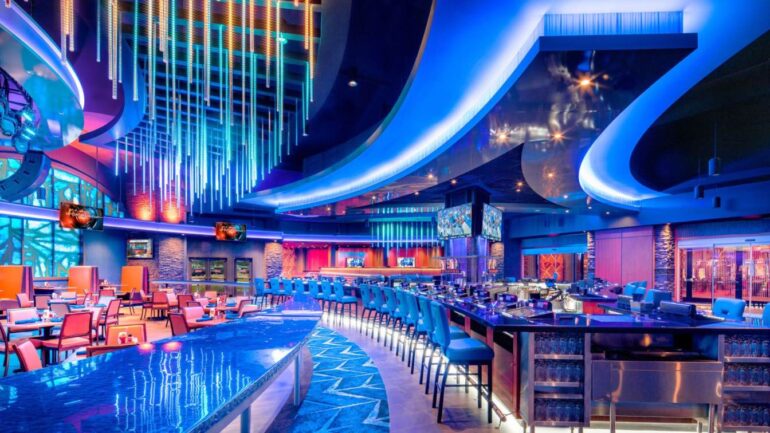
The casino floor is rarely just a collection of random slot machines, tables, and décor. What you see — or don’t see — has been carefully crafted to influence how you feel, think, and act. In this article, we explore the deep psychological strategies behind casino design and how they interact with innate human cognitive biases and reward systems.
Importantly, we’ll use the term casino ergonomics to describe this deliberate design approach — and we’ll look at how players are nudged toward more play, deeper investment, and longer sessions.
One key principle to keep in mind: when your environment subtly guides your choices, awareness becomes your most powerful defense.
The Foundations: Why Design Matters
Environmental Psychology Meets the Casino Floor
From the perspective of environmental psychology, human behavior is deeply affected by our surroundings — we don’t simply respond to stimuli in isolation. Spatial layout, sensory cues, social context, and perceived control all shape decision-making. Casinos exploit this by blending architecture and behavioral science to create a sensory “bubble” that draws players deeper into the experience.
Researchers have long studied casino atmospherics — the combination of sensory and spatial features like lighting, sound, scent, and layout — and shown how they influence emotions, time perception, and risk behavior. (For instance, see work on aural, visual, and olfactory stimulation in casino settings.)
The “Compulsion Loop” as a Driving Framework
Game designers often talk about the compulsion loop: a cycle of anticipation, action, and reward that reinforces repetition. Casinos apply this principle by creating unpredictable and variable reinforcement (you don’t win every time), driving dopamine responses and encouraging repeated play.
This loop is especially powerful because the brain’s reward centers are wired to pay more attention to variable-ratio schedules — that is, rewards given at unpredictable intervals. The desire to “try again one more time” becomes self-reinforcing.
Design Elements and Their Psychological Influence
Below, we break down the major design levers casinos pull — and the psychological mechanics behind them.
Layout & Spatial Flow
Labyrinthine Walkways & Delayed Exits
Unlike shopping malls or airports, casinos often lack obvious straight paths or visible exits. The idea is to gently disorient visitors just enough so they wander into zones they might not otherwise explore.
By placing amenities like restrooms, bars, or food deep within the casino, a designer ensures players pass dozens of gaming options en route.
“Anchor” Games and Game Clustering
Highly visible, popular games (e.g. roulette, blackjack) are placed at focal junctions. These act as anchors that draw foot traffic. Around those anchors, designers cluster slot machines or secondary games in dense groups, encouraging impulse stops.
Clusters also create social energy. Even though players are individually engaged, proximity adds ambient noise — laughter, clinks, chatter — which reinforces the illusion of constant wins.
Lighting, Color & Visual Stimuli
Timeless Interiors: No Clocks, No Windows
One of the oldest tricks: remove all natural time cues. With no windows and no visible clocks, players lose track of how much time has passed, which blurs the distinction between “just a few more minutes” and hours of play.
Warm Hues, Soft Light, and Controlled Contrast
Colors like gold, amber, reds, and browns often dominate interiors. These warm hues have psychologically soothing properties, helping reduce tension or stress.
Spotlighting is used to draw attention to screens, paytables, or jackpot signs. Meanwhile, ambient light remains subdued — the contrast keeps your eyes, and by extension your attention, focused on the machines or cards.
High “Information Load” in Micro-Decor
Flashing lights, cascading LEDs, dynamic displays — these all boost the information load of the environment, making it feel more exciting and stimulating. In studies, environments with more flashing lights and high-frequency stimuli correlate with greater gambling intention.
Sound, Music & Auditory Design
Ambient Masking & Emotional Music
Silence is dangerous — it draws attention to losses. Casinos counter this by filling every space with background sound: music, win chimes, crowd noise, clinking chips. This helps maintain emotional energy and masks negative emotions.
Music tempo is often matched to the desired pace of play: faster beats during high activity zones, slower, more relaxed melodies near quieter lounges.
Reward Audio Feedback
Every win is amplified by audio cues: bells, jingles, exclamations. This reinforcement makes even small wins feel more meaningful. Over time, players begin to associate these sounds with pleasure, independent of the monetary outcome.
Scent, Air & Temperature
Signature Scents & Mood Engineering
A few casinos deploy scent marketing — diffuse, barely noticeable aromas (e.g. vanilla, citrus, exotic blends) to evoke calmer or more positive moods. Pleasant scents can increase dwell time and boost engagement.
Temperature: Alert but Comfortable
Rooms are typically kept slightly cool (around 20–21°C). Warmer environments can lead to lethargy; cooler ones help maintain alertness without discomfort.
Airflow is managed subtly to refresh without creating distractions.
Cognitive Triggers & Reward Illusions
Near-Miss Effect
One of the most studied psychological phenomena in gambling is the near-miss. This occurs when a player’s outcome falls just short of a win (e.g. two matching symbols and one off). Although it’s technically a loss, the brain registers it as a hint of success, triggering reward-related activity and motivating continued play.
Because near-misses mimic “almost winning,” they are potent motivators and commonly engineered into slot machine algorithms.
Losses Disguised as Wins
A spin might lose less than what was wagered but still trigger celebratory effects (lights, sounds). This creates a misleading emotional response: you register as if you’ve won, even though net you lost.
Illusion of Control & Player Agency
People like feeling in control. Casinos nurture this belief by allowing touches: hold buttons, nudges, “one more spin” buttons, or themes that imply strategy. Even though outcomes remain random, the illusion of agency increases engagement.
These mechanics play into cognitive biases such as the gambler’s fallacy (believing outcomes “due” to balance out) or overinterpretation of sequences.
Player Behavior Dynamics
Dissociation & Time Distortion
The sensory richness and removal of temporal cues can lead to dissociation — a state in which players lose awareness of time, fatigue, or losses. In that trance-like state, people may slide past originally intended stopping points.
Habit Formation & Embedded Routines
Repeated exposure creates habit loops. Over time, entering the casino, choosing a machine, playing for some time, and leaving becomes a familiar ritual — often performed automatically.
Neuroscientists find that this habit formation is reinforced by dopamine signaling and internal reward pathways.
Chasing Losses & Escalation
After losses, some players attempt to “chase” their prior losses, increasing bets. This behavior is partly driven by sunk cost fallacy and hot-hand/gambler’s fallacy thinking, exacerbated by the casino environment that encourages emotional reactivity.
Social Proof & the Illusion of Winning
When casinos amplify crowd noise, laughter, heckling, or applause, they create social proof: “others are winning, so maybe I can too.” This taps into herd behavior — people are more likely to persist if they perceive others succeeding.
Resilience, Self-Control & Risk Moderation
Interestingly, recent research has linked resilience (psychological capacity to manage stress) to gambling behavior: individuals with higher resilience may be less prone to compulsive gambling, even under intense designs.
In other words, internal factors (self-control, resilience) moderate how strongly casino design influences behavior.
Ethical Tensions and Mitigations
While casinos might view design as “crafting an experience,” critics see elements of behavioral exploitation. The line between entertainment and manipulation becomes thin when environments are optimized to drown out self-regulation.
Some casinos and regulators have introduced responsible gambling tools:
- Mandatory forced breaks (for example, 60-minute pauses) have been shown in some studies to reduce immediate redeposits and wagering rates, although long-term effects are mixed.
- Session timers, warnings, and nudges that inform players of elapsed time.
- Voluntary limits on spending or time.
- Educative interventions that undo cognitive biases (e.g. reminding players of randomness, highlighting risks).
The ideal balance: creating immersive, enjoyable experiences without undermining player autonomy or exploiting latent vulnerabilities.
Psychological Strategies & Design – A Side-by-Side View
| Design Lever | Psychological Mechanism | Impact on Player Behavior |
|---|---|---|
| Labyrinthine layout | Gentle disorientation, forced exposure | Longer walks, impulse encounters |
| Anchor placements | Salience, sectioning | Directs flow into game zones |
| No clocks/windows | Time blindness | Extended play without awareness |
| Warm lighting + spotlighting | Focus, mood regulation | Reduces stress, highlights incentives |
| Flashing displays | High information load | Heightens arousal, sustains attention |
| Ambient/discrete scent | Mood priming | Subtle lift in positivity |
| Ambient sound + win audio | Emotional reinforcement | Rewards feel richer, losses fade |
| Near misses / disguised wins | Illusory reward signals | Deepens engagement even after loss |
| Illusion of control | Cognitive bias leverage | Encourages more bets, slower exit |
| Forced breaks / timers | Disruption to loop | Offers pause to rethink decisions |
Understanding this matrix helps one see how design is not an afterthought — it is central to shaping behavior.
Advanced Insights & Recent Findings
Visualizations & Risk Perception
In research on how data is presented in game interfaces, certain visualization styles skew risk perception. Some encodings (triangles, circles with proportional areas) push people toward riskier choices, while icon arrays elicit safer decisions. This suggests even the way win/loss metrics are shown can shift behavior.
Breaks and Decision Cooling
Controlled experiments in online gambling have found that longer mandatory breaks (e.g. 60 minutes) can reduce in-session wagering and depositing. Yet, the effect doesn’t always carry into the next day — it’s more of an acute interruption than a lasting brake on behavior.
Shorter forced breaks (90 seconds, 5 minutes) may not be sufficient to disrupt the compulsion loop meaningfully, whereas longer ones seem more impactful.
Neural Baselines & Behavioral Biomarkers
Neuroscience studies reveal that repeated near-miss events or disguised wins activate reward pathways in the ventral striatum. Over time, the repeated stimulation can recalibrate a player’s baseline reward expectation, increasing tolerance (i.e. needing greater stimuli to feel the same thrill).
This conditioning is one reason high rollers often demand progressively more intense experiences.
Real-World Applications for Designers, Regulators & Players
For Game Designers & Architects
- Integrate “quiet zones” or de-stimulation corridors to allow players to decompress.
- Use data analytics to monitor where players disengage; redesign those zones to reduce friction.
- Offer modular layouts to rotate anchor zone positions and refresh spatial engagement.
For Responsible Gambling Advocates
- Advocate for mandatory break policies or trigger-based interrupts tied to player behavior.
- Promote educational nudges that remind players of randomness and cognitive biases.
- Build tools for self-awareness — dashboards showing real-time losses, time spent, deviation from planned limits.
For Players (Your Best Defense)
- Set a strict time or loss boundary before you begin.
- Use your phone or watch to remind yourself of time — bypass the casino’s attempt to erase it.
- Pause frequently to reflect: “Is this decision still rational, or am I chasing emotion?”
- Be mindful of small wins: if lights and sounds trigger joy, check if your net is actually positive.
- Recognize the near-miss trap — almost winning isn’t winning.
Frequently Asked Questions (FAQ)
Q: Do design strategies work equally for new and experienced gamblers?
A: Design cues like lighting, ambiance, and audio tend to have stronger influence on newcomers who haven’t yet built internal filters. Seasoned gamblers may be more resistant to some cues, but even they can be nudged deeper during emotional states (e.g. after a win or loss streak).
Q: Can these psychological techniques be applied online?
A: Absolutely. Virtual casinos mimic the same principles: dynamic visuals, audio reinforcement, near-miss animations, progress bars, and pop-up reminders. The compulsion loop translates directly into digital spaces.
Q: Are there “safe casino designs” that avoid manipulation?
A: Yes — designs with transparent clocks, optional quiet rooms, enforced cooling-off breaks, and user choice over ambient stimuli can reduce exploitative pressure. Some venues already offer “self-exclusion” rooms or zones with minimal stimuli.
Q: What research gaps remain in casino design psychology?
A: More longitudinal studies are needed to assess long-term effects of design interventions (e.g. enforced breaks), especially across different cultures. Also, neural-level studies could more deeply map how evolving reward baselines shift under sustained play.
Q: How does individual resilience interact with casino environments?
A: Resilience appears to moderate vulnerability. Players with stronger emotional regulation and stress tolerance are less swayed by cues and recover better from losses. Training or awareness practices may help bolster this buffer.